
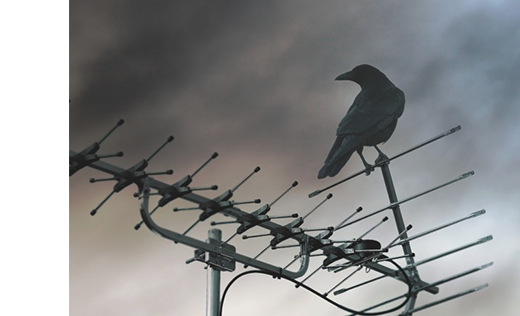

No, and nothing changes for years yet. Freeview is guaranteed until at least 2034 under current broadcast licences. The Government is now consulting on what happens after that date. Broadband services such as Freely are expected to take over eventually. For now, your aerial and TV will keep working exactly as they do today.
That’s the short answer. The longer one is worth five minutes of your time. The way free TV reaches your living room will change over the next decade. The headlines, though, have made it sound far more alarming than it is. Here’s what’s actually happening, what it means for households around Bath, and what you should do about it.
Why is everyone talking about a Freeview switch-off?
In May 2026, the Government confirmed it will publish a Green Paper on the future of terrestrial television. A Green Paper is a consultation document. It starts a discussion rather than announcing a decision. Some parts of the media reported that the current 2034 licence deadline is unlikely to be extended. That triggered the wave of “end of Freeview” headlines.
The background is simple economics. Around 13 million UK homes still use Freeview. Running a national network of transmitters costs a lot, and viewing habits have shifted heavily towards the internet. Research commissioned by Sky found that 94% of UK adults now have home internet access. Broadcasters would rather fund one delivery system than two.
So the direction of travel is clear. The timescale, though, is long. 2034 is the earliest anything could be switched off. It is not a confirmed date for anything.
When will Freeview actually stop working?
Not before 2034, and possibly later. The multiplex licences that keep Freeview on air run until then, and Ofcom has confirmed the service is secure for that period. Any switch-off also depends on near-universal broadband. The Government is targeting 99% coverage by 2030. Rural households around Bath and West Wiltshire know that targets and reality don’t always match.
There is organised resistance too. The campaign group Silver Voices is petitioning to protect terrestrial TV beyond 2034. Their argument is that older viewers and homes without reliable broadband would be left behind. Whatever the Green Paper proposes, expect a long transition with plenty of notice.
For comparison, the analogue-to-digital switchover took years of planning and rolled out region by region. This change is bigger.
What is replacing Freeview?
Freely. It’s run by Everyone TV, the joint venture between the BBC, ITV, Channel 4 and Channel 5. Launched in April 2024, Freely delivers the same free channels over your broadband connection instead of an aerial. You get a proper channel guide, the ability to pause and restart live TV, and the main catch-up apps in one place.
We covered the service in detail in What Is Freely and Do I Still Need a TV Aerial? The key point: Freely comes built into many new TVs. There’s no subscription and no box. If your broadband is decent, it already works today.
For TVs without Freely built in, standalone streamers now exist. We stock the Manhattan Aero 4K in the shop, and it has been hard to keep on the shelves.
Is Freesat being switched off too?
Freesat faces a shorter timeline than Freeview, though nothing has been announced. Freesat piggybacks on the same satellites Sky uses. Sky’s contract with satellite operator SES runs until 2029. Sky has already stopped selling its satellite-based Sky Q service to new customers. Once Sky no longer needs those satellites, funding them for Freesat’s million or so homes becomes hard to justify.
If you rely on a dish for free TV, there’s no need to act now. It would be sensible, though, to make your next TV a Freely-compatible one. Unsure how the two free services compare in the meantime? Our guide to Freesat vs Freeview covers it.
Do I need to do anything now?
For most people, no. Here’s the honest checklist.
If your Freeview setup works, leave it alone. Your aerial has at least eight more years of service in it, and probably more. There is no benefit to ripping anything out. If your set-up is aerial-free already, our guide to getting Freeview on a smart TV without an aerial explains your options.
If you’re buying a new TV, choose one with Freely built in. It costs nothing extra on supported models. It also means the TV is ready for whatever happens after 2034. We can show you which televisions include it.
If your broadband is shaky, that’s the thing to sort out eventually. Streaming live TV needs a stable connection more than a fast one. For rural properties, we install Starlink alongside conventional aerials to cover both bases. And remember: a smart TV still works without the internet, so nobody is cut off overnight.
If you’ve seen “your TV will stop working” claims online, be sceptical. Your TV won’t stop working. At most, one of the ways it receives channels will retire, with years of warning.
Frequently asked questions
Will my TV aerial become useless? Not before 2034 at the earliest. Even after any switch-off, an old aerial simply becomes redundant rather than causing problems. Many households will have moved to Freely long before then. Our smart TV aerial set-up guide explains why we still recommend keeping one connected.
Will I have to pay for TV once Freeview goes? No. Freely carries the same free-to-air channels without a subscription. You’ll need a broadband connection, which most households already pay for.
Does this affect my TV licence? The two are separate. Watching live TV requires a licence however it arrives: aerial, satellite or broadband. No changes to the licence have been announced as part of these plans.
Can I get Freely on my current TV? Only if it’s a supported model, as Freely is built into the TV rather than added as an app. Standalone devices like the Manhattan Aero 4K solve this for older sets. Most free channels are also available through individual apps like BBC iPlayer and ITVX.
I live in a village with poor broadband. Will I lose TV? This is exactly what the Green Paper consultation is meant to address. It’s also the main reason campaigners expect any switch-off to be gradual. Nobody is proposing to cut off homes that have no alternative.
Have a question about your own setup? Call in and see us, or ring 01225 331441. We’ve been installing aerials and setting up TVs in Bath since 1962. We’d rather give you a straight answer than sell you something you don’t need.


